AI Shopper Testing vs User Testing: What’s the Difference?

Synmentis
AI shopper testing and user testing are often discussed as if they are competing versions of the same thing.
They are not.
Both can put a website in front of someone and observe what happens.
But they start with different constraints, answer different questions, and produce different kinds of evidence.
The easiest way to think about the difference is this:
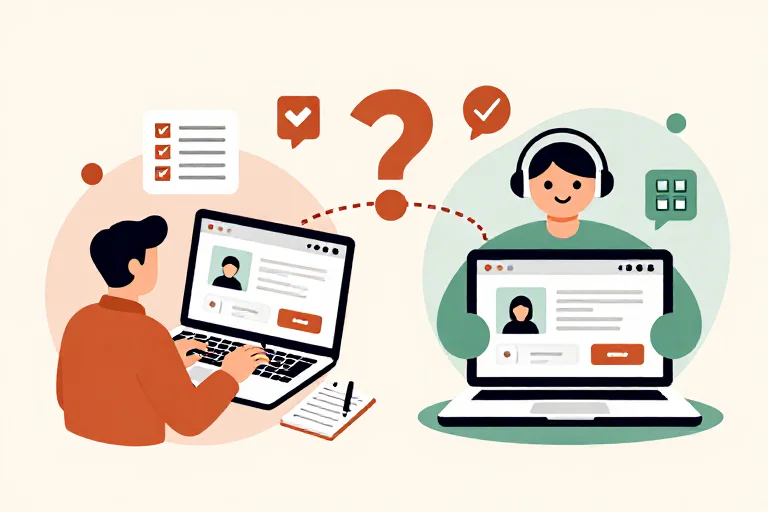
User testing asks real people to use your product or website.
AI shopper testing uses AI shoppers to explore a buying situation and make a purchase decision.
That sounds simple.
The interesting part is what you can learn from each.
What is user testing?
User testing usually involves real people interacting with a product, prototype, website, or task.
A participant may be asked to:
"Find a dining chair that would work in your apartment."
Or:
"Try to purchase this product."
Or:
"Find out whether this product is available for delivery."
The researcher observes what happens.
They may look at:
- where the participant clicks
- what they say
- where they hesitate
- what they misunderstand
- what they ask
- whether they complete the task
- how they describe the experience afterward
The important thing is that the participant is a real person.
Their background, habits, expectations, preferences, and past experiences are part of the research.
That makes user testing extremely valuable.
It also makes it more expensive and more operationally difficult to run at scale.
What is AI shopper testing?
AI shopper testing uses an AI system as the shopper.
Instead of recruiting a human participant every time you want to explore a shopping question, you define a realistic buying situation and let the AI shopper navigate the site.
For example:
"I am furnishing a small apartment. Find a dining chair under $250 that looks comfortable enough for daily use and does not feel cheap."
The shopper explores the site.
It can inspect products.
Compare options.
Read available information.
Look for evidence.
Follow different paths.
And eventually make a decision based on what it found.
The useful output is not only the final choice.
It is the reasoning and evidence connected to that choice.
The biggest difference: real human experience vs scalable simulation
This is the most important distinction.
A real participant is a real customer or potential customer.
An AI shopper is a simulation.
That means user testing has something AI shopper testing cannot fully reproduce:
a real person's lived experience.
A participant may have a specific memory of buying a similar product.
They may have expectations formed by years of shopping.
They may have strong emotional reactions.
They may interpret an image in a way that an AI model would not.
They may be distracted.
They may misunderstand something for reasons that are difficult to predict.
Those are not bugs in user testing.
They are part of studying real people.
AI shoppers do something different.
They give you a repeatable way to explore shopping situations without recruiting a new human participant every time.
That creates a different advantage.
AI shoppers are easier to run repeatedly
Imagine you have three hypotheses about a product page.
Hypothesis 1
Shoppers cannot tell which version fits a small apartment.
Hypothesis 2
Shoppers understand the product but think it is too expensive.
Hypothesis 3
Shoppers are comfortable with the price but uncertain about delivery.
With traditional user testing, you could recruit participants and ask them to explore the site under those situations.
That can produce strong evidence.
But doing repeated rounds of testing takes time.
You have to recruit.
Schedule.
Explain the task.
Run the session.
Review it.
Compare participants.
Then repeat.
AI shoppers allow you to run many structured scenarios much more quickly.
That is useful when the question is:
"What happens if I test this experience from several different buying situations?"
The advantage is not that the AI is more human.
It isn't.
The advantage is that the experiment becomes easier to repeat.
AI shoppers can explore multiple buying situations
A single ecommerce site can have many possible shopper types.
Consider a mattress store.
One shopper might be:
"I sleep on my side and want a mattress that does not feel too firm."
Another:
"I am buying a mattress for a guest room and care mostly about price."
Another:
"I have a small budget but want a mattress with a long warranty."
Another:
"I need delivery before next Friday."
The store is the same.
The decision criteria are different.
AI shopper research lets you create these scenarios explicitly.
That can reveal where the site works well and where it becomes difficult.
For example:
The first shopper may find enough information to decide.
The second may discover that several products are too similar.
The third may not find warranty information.
The fourth may find that delivery timing is too difficult to determine.
The interesting result is the difference between journeys.
User testing can uncover reactions that simulations cannot
There is a reason real user testing remains important.
Suppose a shopper sees a product photo that feels misleading.
A human participant may immediately say:
"This looks much bigger than I expected."
Or:
"This photo makes the material look more expensive than it probably is."
That reaction contains context.
The participant is bringing their own visual expectations and experience into the task.
An AI shopper can identify an inconsistency or uncertainty.
But that does not make the simulation equivalent to a human response.
This matters most when you're researching:
- emotional response
- brand perception
- unfamiliar cultural context
- accessibility
- physical interaction
- strongly personal preferences
- sensitive customer experiences
For those questions, real people can provide evidence that an AI shopper cannot substitute for.
So when is AI shopper testing useful?
AI shopper testing is particularly useful when you want to explore a buying decision repeatedly.
For example:
You want to investigate a specific ecommerce problem
Instead of:
"Test my website."
You can ask:
"Why might a first-time shopper hesitate before adding this product to cart?"
That creates a focused research question.
You want to compare shopper scenarios
For example:
- price-sensitive shopper
- quality-focused shopper
- careful first-time buyer
- gift buyer
- comparison shopper
You can see whether the same website works differently for each.
You want to investigate before making a redesign
You can use AI shoppers to explore the current experience.
Then redesign the page.
Then repeat similar studies.
That does not prove the redesign will increase revenue.
But it gives you a way to investigate whether the original problem actually changed.
You want more evidence before running an A/B test
This is an important use case.
Suppose your analytics show that product-page add-to-cart performance is weak.
You could immediately start testing headlines, layouts, CTA colors, or review placement.
Or you could first investigate what shoppers are actually struggling with.
If multiple shopper journeys repeatedly reveal uncertainty about dimensions, the next test can target that problem.
That is a much stronger starting point.
When should you use human user testing?
There are many cases where the answer should be:
use real people.
For example, when you need to know how actual customers react to:
- a new brand concept
- emotional messaging
- a physical product
- accessibility barriers
- culturally specific language
- sensitive topics
- unfamiliar real-world behavior
A simulation can help generate hypotheses.
But it should not be presented as proof that real customers will behave the same way.
That's an important boundary.
AI shopper testing vs user testing: a practical comparison
| Question | AI shopper testing | User testing |
|---|---|---|
| Who is interacting with the site? | AI shopper | Real person |
| Can it simulate many scenarios quickly? | Yes | More difficult |
| Does it represent actual customers? | No | Yes, when recruited appropriately |
| Can it explore a defined shopping goal? | Yes | Yes |
| Can it explain where a decision changed? | Yes | Yes |
| Can it reveal real emotional reactions? | Limited | Yes |
| Can it be repeated frequently? | Usually easier | Requires more coordination |
| Is it useful before an A/B test? | Yes | Yes |
| Does it replace real customer research? | No | No |
| Best role | Exploration and repeated shopper research | Human validation and deeper qualitative research |
The useful thing about this table is that there is no single winner.
The methods solve different problems.
The real question is not "Which one is better?"
That is usually the wrong framing.
A better question is:
What do I need to learn?
If the question is:
"How does a real customer react to this new brand?"
Use real people.
If the question is:
"What happens when different shopper situations encounter this product page?"
AI shoppers can be very useful.
If the question is:
"Why are visitors dropping from product to cart?"
Start with analytics.
If the question is:
"What are shoppers trying to resolve before deciding?"
Use shopper research.
Different questions need different evidence.
The strongest approach can combine them
You do not need to choose one method forever.
A practical ecommerce research process could look like this:
Step 1: Find the signal
Use analytics to identify where something unusual is happening.
For example:
Product views are high but add-to-cart activity is low.
Step 2: Investigate the buying decision
Use shopper research to understand what people may be trying to resolve.
This can include AI shopper testing, customer interviews, reviews, support data, session recordings, or other evidence.
Step 3: Form a concrete hypothesis
For example:
First-time shoppers cannot tell which product is suitable for a small room.
Step 4: Make the smallest useful change
Maybe the solution is:
- better dimensions
- clearer comparison
- more relevant imagery
- a better use-case explanation
Not necessarily a complete redesign.
Step 5: Validate the change
You can use real users, an A/B test, or both depending on the problem.
The research method should follow the question.
AI shopper testing is not "fake user testing"
I think that framing causes unnecessary confusion.
An AI shopper is not a cheaper human.
And it should not be sold as one.
It is better understood as a different research instrument.
A calculator is not a human mathematician.
An analytics dashboard is not a customer interview.
An AI shopper is not a human shopper.
Each one helps you see something different.
The interesting opportunity is what becomes possible when they are combined.
Where SynMentis fits
SynMentis is built around this middle layer.
You give it a real buying question.
The AI shoppers explore the website.
They compare what matters to them.
They make a decision.
Then the journey is turned into findings about:
- what the shopper understood
- what created confidence
- what created doubt
- what information they could not find
- where the decision changed
- why they continued or left
That is different from simply asking an AI:
"Audit my website."
A generic audit starts with the website.
A shopper study starts with the decision.
You can learn more about the basic approach in What Is AI Shopper Testing?.
And if your current problem is product-page performance, Ecommerce Product Page Optimization shows how the same shopper-first thinking can be applied to the product experience.
The key limitation to remember
AI shoppers can be extremely useful without being treated as ground truth.
You should still ask:
- Is this pattern repeated?
- Is there other evidence supporting it?
- Does it make sense given real customer feedback?
- Can the finding be tested?
- Did the change actually improve the business outcome?
That is how shopper research becomes useful.
Not because the AI said something.
Because the AI helped you discover a hypothesis worth investigating.
The best research process is not about choosing one tool
Ecommerce teams often want a single source of truth.
In practice, there rarely is one.
Analytics are good at showing behavior at scale.
Session recordings can show individual interactions.
Customer interviews can reveal how people describe their experience.
User testing can expose real reactions.
AI shoppers can make it easier to explore realistic shopping situations repeatedly.
Each method has a different blind spot.
The goal is not to find the perfect replacement for everything else.
It is to use the right evidence for the question you are trying to answer.
And for one very specific question —
"What happens when a shopper with this goal tries to buy from my website?"
— AI shopper testing gives you a new way to investigate the answer.